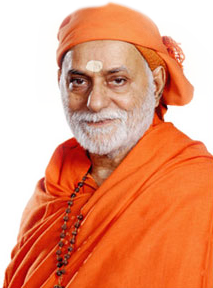









A Sanyasin usually has little regard for the householders. But, for livelihood he has to depend on householders. He begs for alms. Initially begging removed his ego, made him feel small, humiliated. But time passed and begging became an art for him. He learns to distinguish between the giver and the not giver, the best giver and the worst. Preferences grow in his mind. He selects his visits, the houses he will grace and bless.
His hands, he feels, are no more the beggar’s. They are the prince’s. They are no more mortal and human. They have become great and heavenly. To extend them before any one is a great decision of his. To give to him, he feels is a great blessing to the giver. He begins to scold the giver, ascribe faults to him, sometimes curses him and sends his family to hell.
The householders too have their mysterious growth. The honour the sanyasin, but not in the manner the honourable and honoured will want, but in their own manner. ‘We want you to grace our humble home’, they submit before him. They get him to their house. After a time, the visitor turns inferior and the host superior. “You have to be what we like”, they demand. The honourer becomes the honoured, the honoured becomes the worshipper.
The lovers and devotees of God boast that they are so. They think and feel what exactly is not to be in the name of God’s love and piety. They go to a temple to worship with their whole heart. When their visit started and worship began, they were humble, fervent and simple. But with the passage of months and growth of devotion, their status also began to change fast.
Their house is theirs. The Temple is none’s. If at all it is God’s. Man goes to the Temple from his house to find something visibly and think it is God’s. Thereafter his intention is to think that all are God’s, the whole world, even his house.
But the exact opposite comes to be slowly, perhaps without his knowledge, or may be with his cherished wish. He begins to make the temple also ‘his’.
He makes gifts to God, denotes liberally to the temple, makes the donations known and announced. Sometimes he even makes his name plates fixed to the things gifted. He wants his name seen, heard, honoured, if possible even worshipped, like God’s, along with that of God. Where is his humbleness now? Who is the worshipper, and what is the object worshipped?
The patient becomes the doctor. The doctor is made the patient. The giver of alms to the beggar becomes another kind of beggar. He begs for grace from the other. The beggar begins to give and the giver starts receiving. A curious conflict, hidden as well as patent!
A person learns singing, begins to sing with art. He seeks those who will appreciate his song. He sings the praises of God. He prays to God to make him humble, to quell his pride, to keep him tied to his devotion. Time passes. His devotion and songs both become praiseworthy. With that he feels he is to be held in esteem, not to be treated with indifference.
He lays conditions and imposes them on others. He rates his merit. With every year of his performance, as people encourage him through increasing appreciation, he enhances his rating. He forgets that it is people who made him popular and great. What he owes to them for their love and appreciation, he totally forgets, ignores. The mirror which shows your face and enables you to decorate it, making look what it does, is safely set aside and ignored. Not even the least trace of gratitude is fostered.
Well, it is but a mirror in the case of reflection of the face. It is inert and does not look for any reciprocal feelings. But certainly the people, the society at large, in which an artist is born, which makes him what he is, are not inert. A gratitude, when fostered, adorns more the one who shows it than the one to whom it is shown. A quality benefits its possessor more than any one else. Not to feel this sense of gratitude whenever it is due is a mental and moral poverty. It may not be punishable by others, like any other crime. But it will surely bring its recompense within one’s own mind, according to the incorrigible laws of the mind, a mystic product, like any other, of Nature. By the time the mistake, the omission, is recognized, it becomes too late. What results is a heavy mind, a painful self-torturing conflict.
A mother tells her daughter repeatedly about many lessons on daily routines, manner of talking and conducting herself before others. Being a girl, the daughter pays little heed to the mother, her words of advice and criticism. Often she also speaks slightingly about the loving mother. I have heard it said by the daughter, ‘I do not mind what you say. I shall learn when I need it. Do not teach me anything and sadden my life.’ She retorts a lot more.
But will life and the world leave any one? It is more hard on those who like to be light with it. With marriage, the daughter’s problems begin to be born. They grow in number and strength. She resents them all. She tries to be light in heart and mind, disregard the problems and be cheerful. But her efforts are too weak, futile. Her new life becomes a mess. She remembers her loving mother, her careful words of advice, criticism, caution. But in a way it is too late she realizes. Intolerance has already become part of her nature by now. When tolerance, forbearance, patience had to be learnt, practised, she got trained herself with the opposites. Now to alter her nature, be what she is not, is not easy. The result is anger. Impatience reigns at every front. The mind becomes tense.
But whom to get angry with? With the mother she was able to be angry easily. For it was her mother, loving and accommodating. But now the people by her side are not so. They are those who came into her life newly, and who always look to her with expectation, competition. They have everything with them to find fault with her. Gradually, when she too becomes a mother, the role of mother is realized by her. The appreciation for her own mother suddenly takes root in her mind. She likes to be by the mother’s side for some months, listening to her, telling her problems freely and delighting her company. But where is that leisure? The husband has his dues to claim for her. The husband’s parents and the rest have theirs too. Altogether it becomes too taxing. What can be done? Craving for the mother’s affection on the one side, pressing responsibilities on the other, both go on pressurizing her mind beyond limits. Yet nothing can be done to relieve the fate!
Marriage is always between two. But the burdens it brings about do not just remain within that orbit. To marry one is also to be related to in many ways with those related to the husband or wife. This is the real problem, cause for disharmony and agitations. The wife can easily think of the husband, his needs and worries. She can go to any extent in bearing them, resolving them, making sacrifices and facing humiliation. But when it comes to a question of those other than the husband, may be his parents, brothers or sisters, the wife’s mind has a natural, habitual, practical difficulty. She can easily think of her parents, brothers and sisters, for they were in her mind right from birth, and throughout her growth.
What befriends us lives in our mind. This is the natural law. To replace the thoughts of one’s own parents by those of husband’s is not an easy process. It may be demanded, forced by circumstances, yet the relationship remains alien. At the same time, the husband does not pose that problem. The wife will often say, especially in confrontations with her husband, ‘I have married you all right, but you alone. You may have your brothers and the rest, but they are yours, not mine. I can only think of them indirectly, because of my thoughts of you.’ Is she not correct?
But instead of appreciating her view, the husband invariably fights back; that only destroys their relationship and enhances the disharmony and difficulties. The mind of the wife cannot die simply with the garland of wedding placed around her neck by the husband. Not can the husband’s either.
Our mind is as much a product of nature, as say earth or any other element. We should understand that this is so, and enable each person, be it one’s parents, wife, husband or another, to grow in tune with its nature and compulsions. Understanding, yes, right understanding, is the only means to help mankind in every situation. The love of the mind, its likes and dislikes, etc. are first and last to be rightly sensed. Then one has to help the other to accept and handle them, and then to evolve the harmony needed at any time in the situation in which both are. Understanding and acceptance of what is has to be there first and last, if any human relationship is to endure and progress successfully.
Conitnued....


